Five homes underway in a new Virginia plat
A message from our executive director:

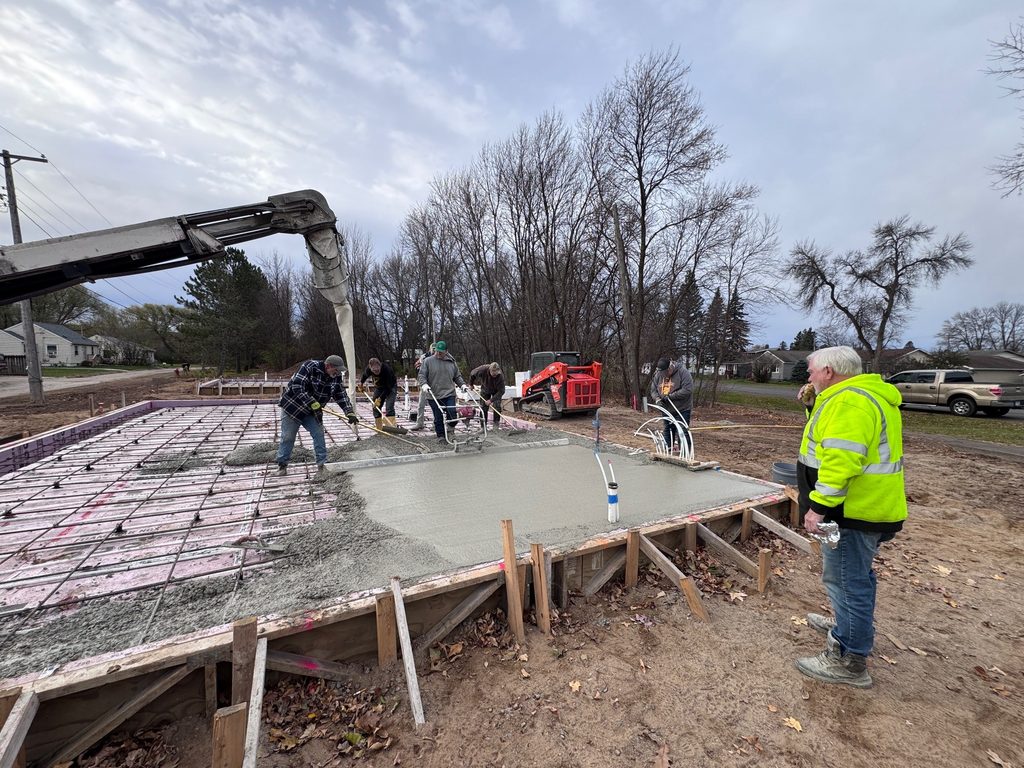
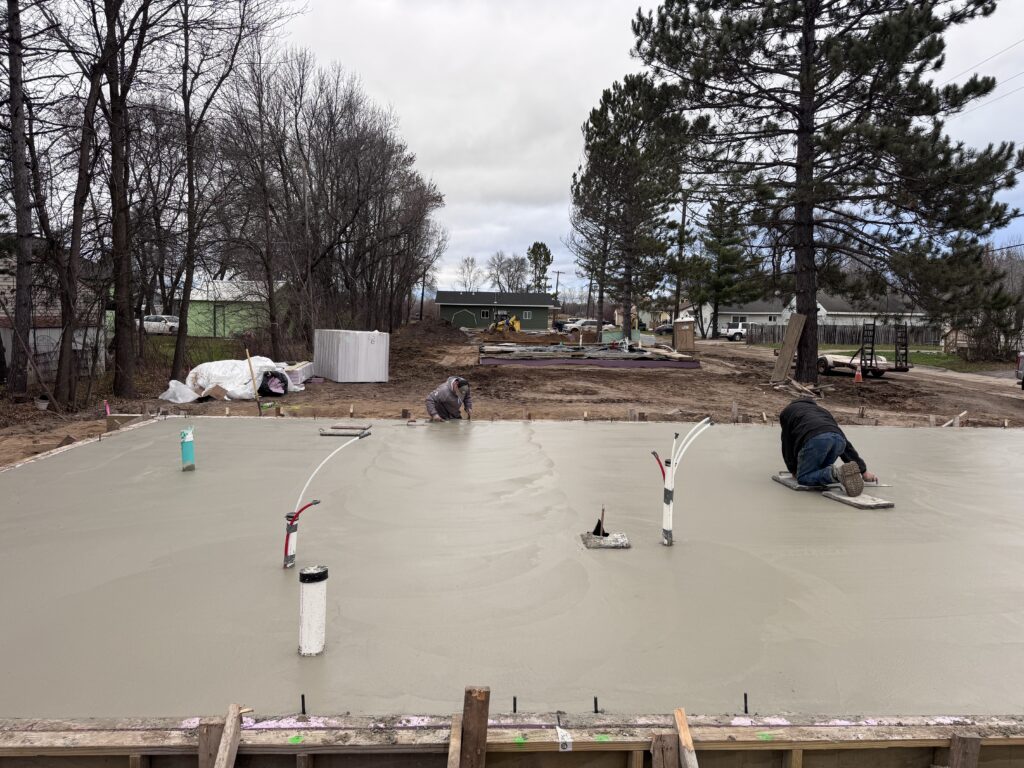
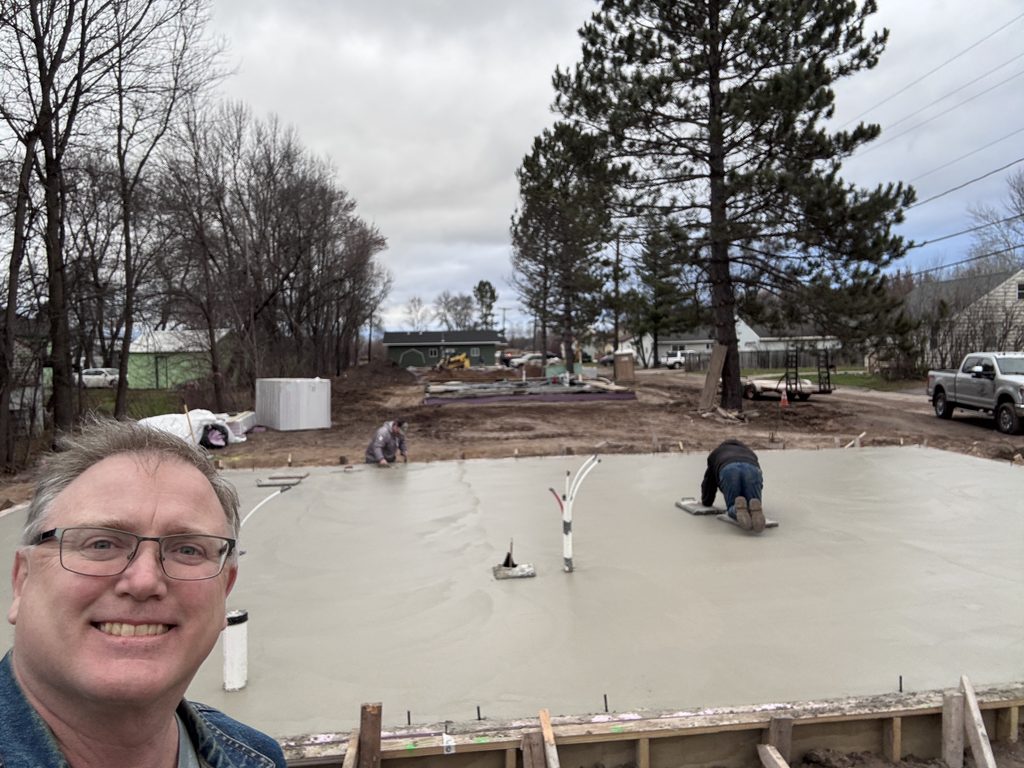
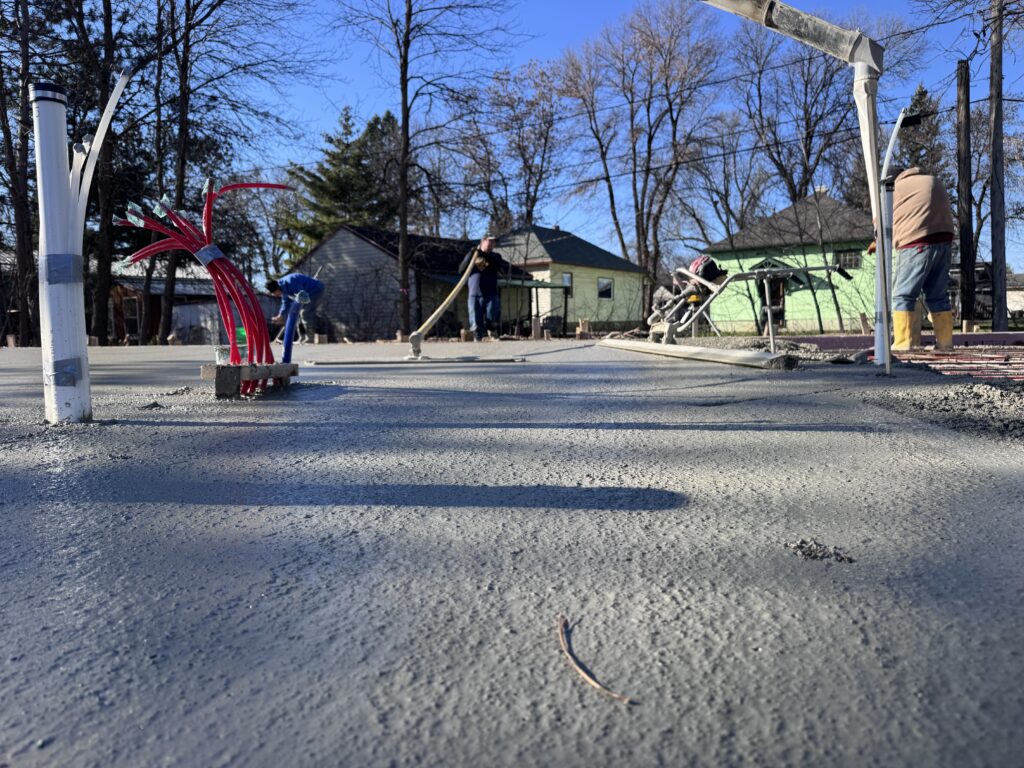
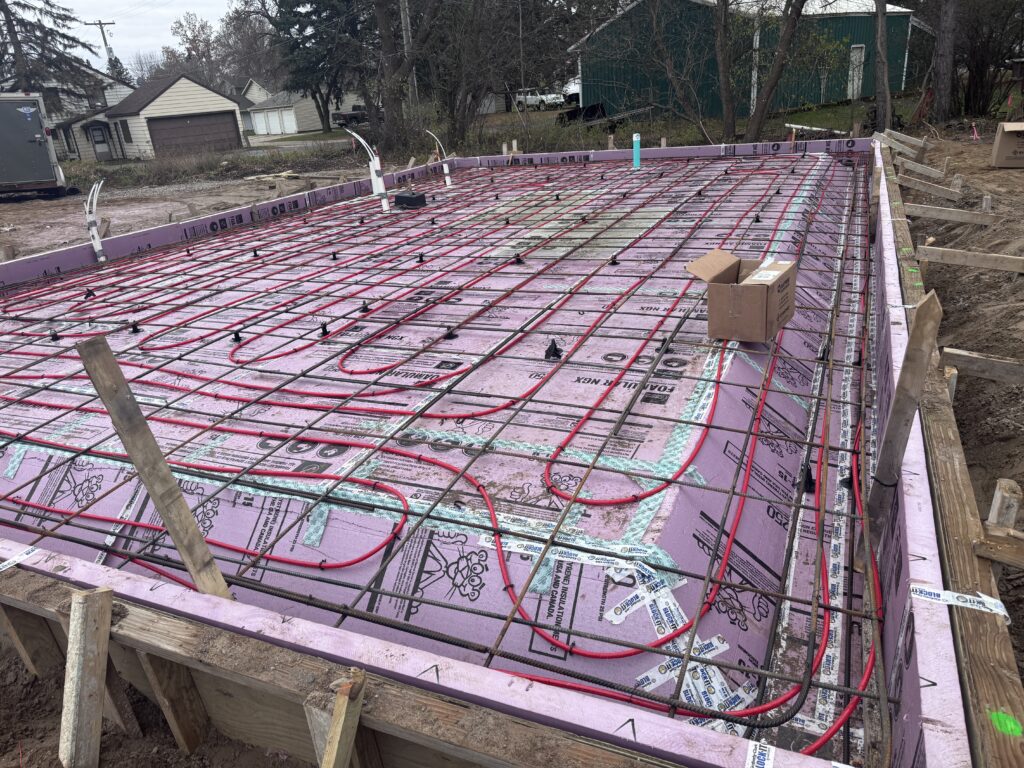
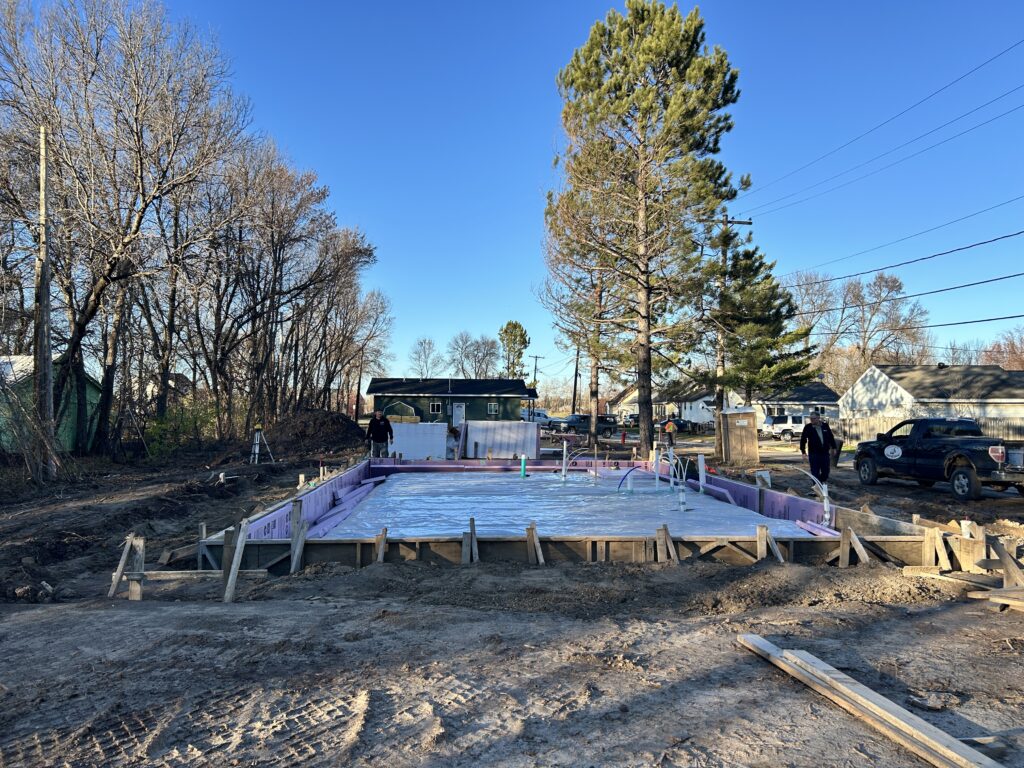
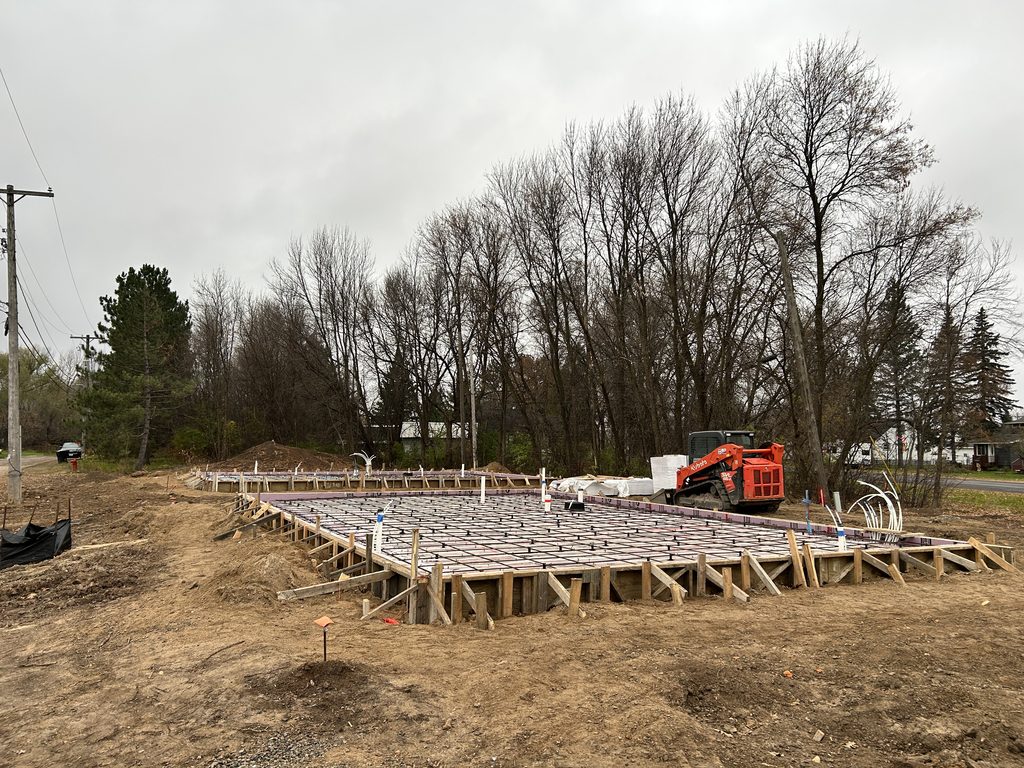
I want to take a minute to reflect on our great team of staff, board members, volunteers, funders, government partners, and contractors. This group really pulled off a miracle. We poured three foundations in Virginia’s Ridgewood neighborhood this week—two on Monday and the third yesterday (Nov. 19).

We have the best staff and board! Thank you to all who work daily to lead and put feet to our mission.

Our funders and government partners made today possible by supporting our work and moving our plat and permits forward. Yes, five Habitat homes will be in Habitat Addition to Virginia, St. Louis County’s newest platted addition! The City of Virginia also made the inspection process for these three foundations very simple and easy with out delaying us in any way.
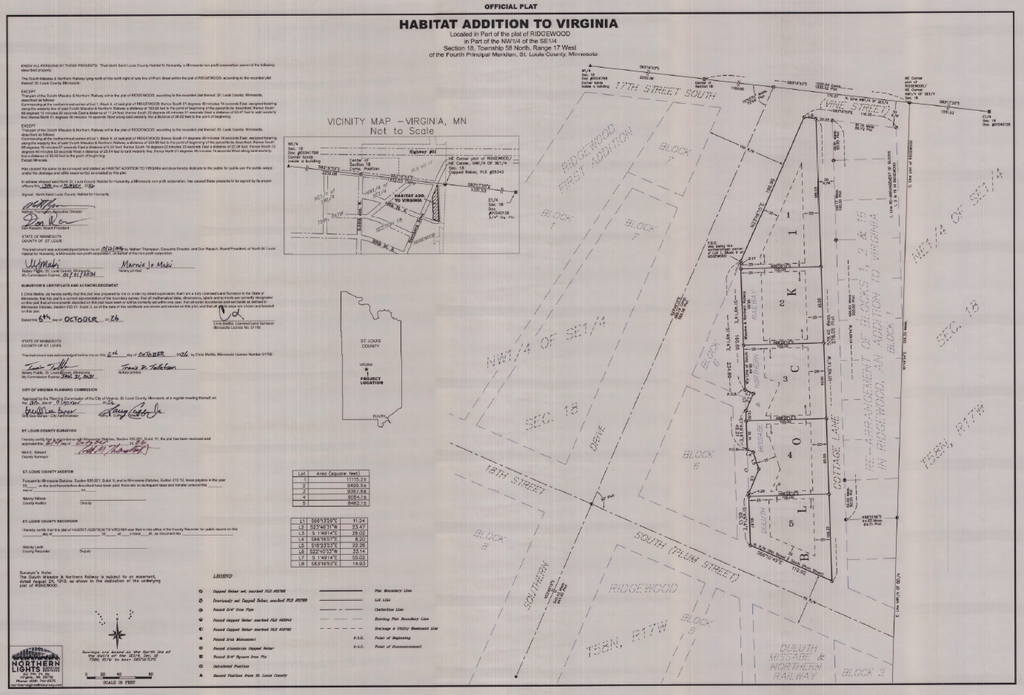
Habitat for Humanity of Minnesota, our state support organization, gave us funding via their loan program. Second mortgage subsidies for partner families and incredible support from Iron Range Resources & Rehabilitation certainly helped us get this five home development off of the ground.

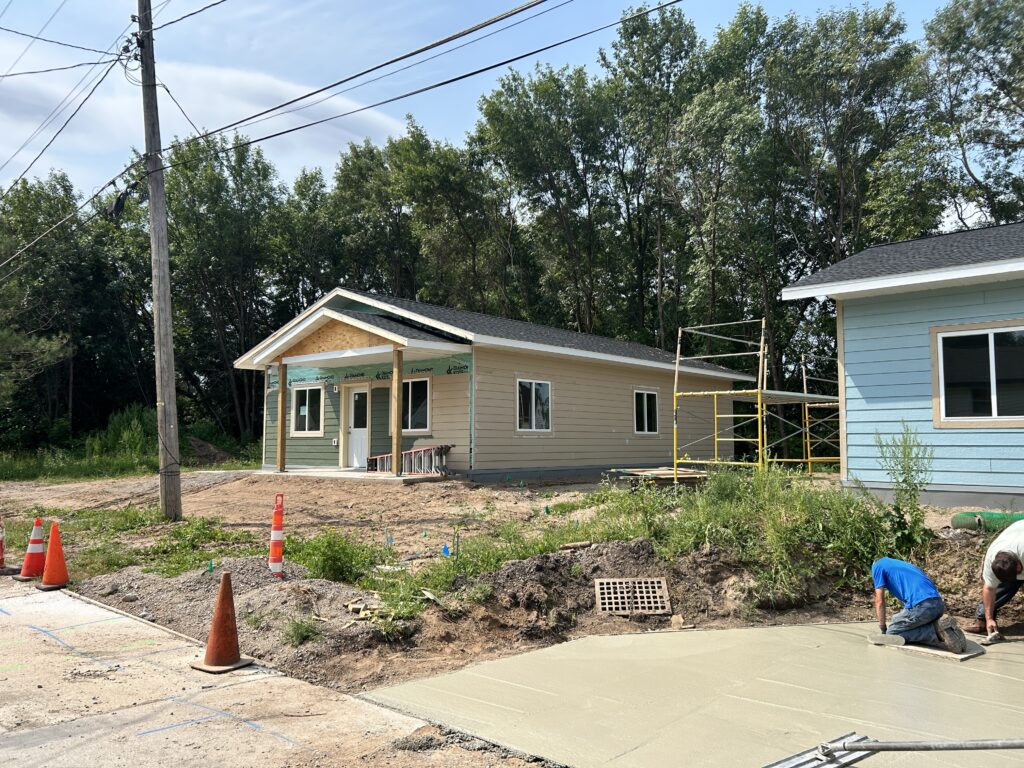
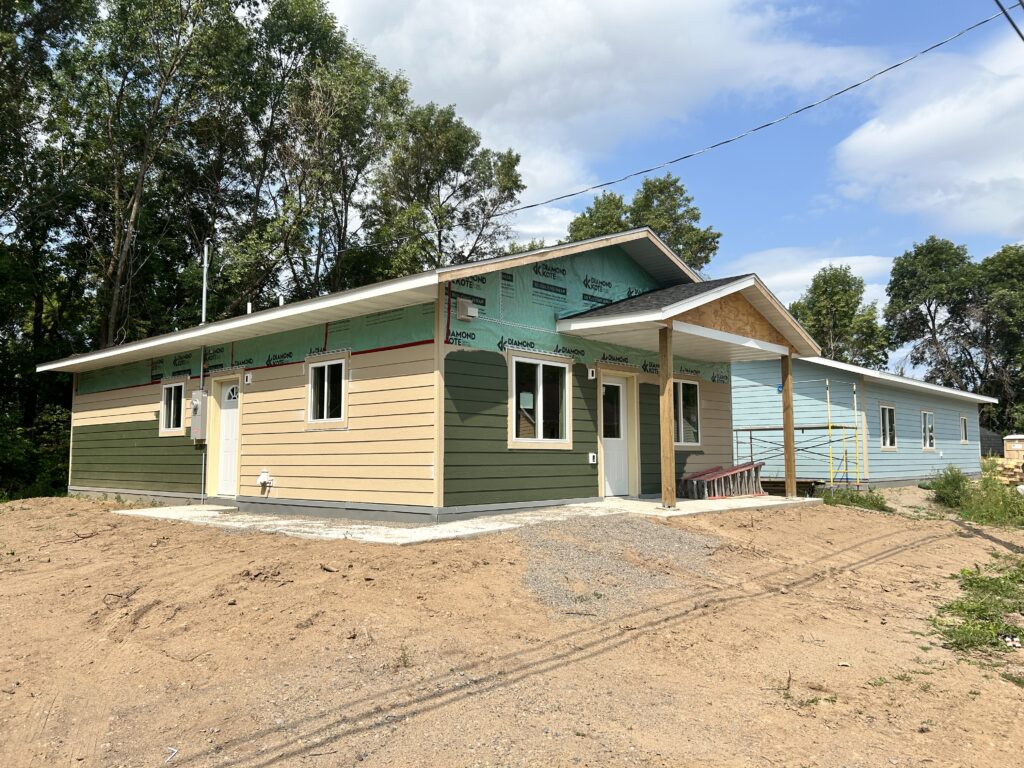
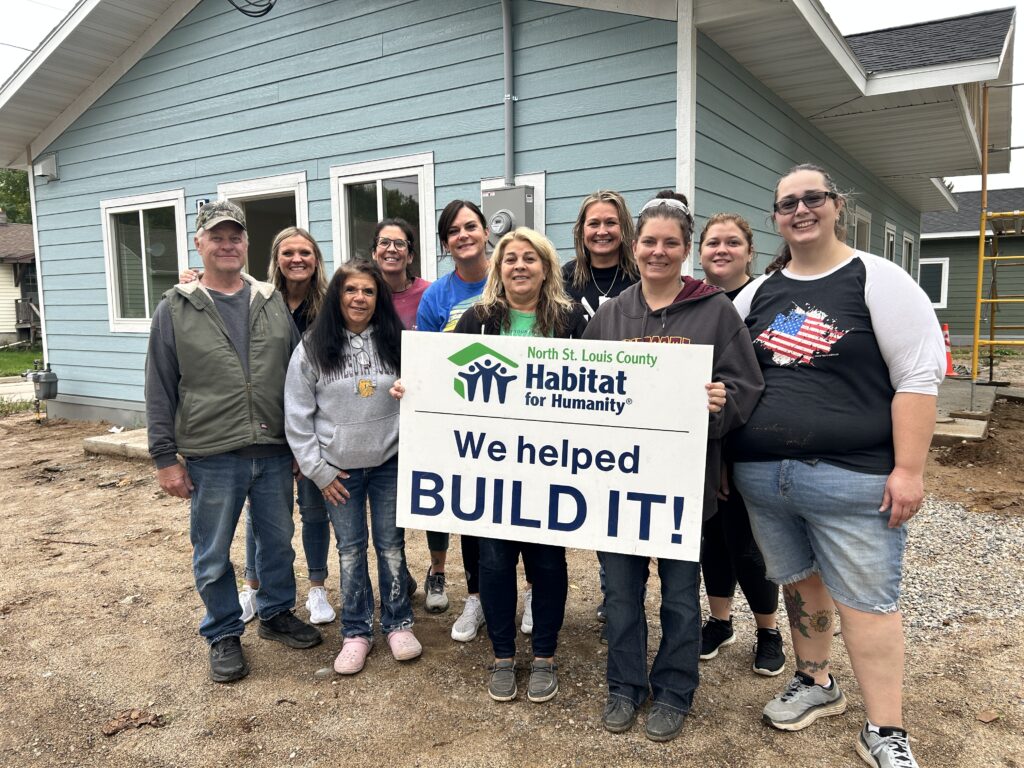
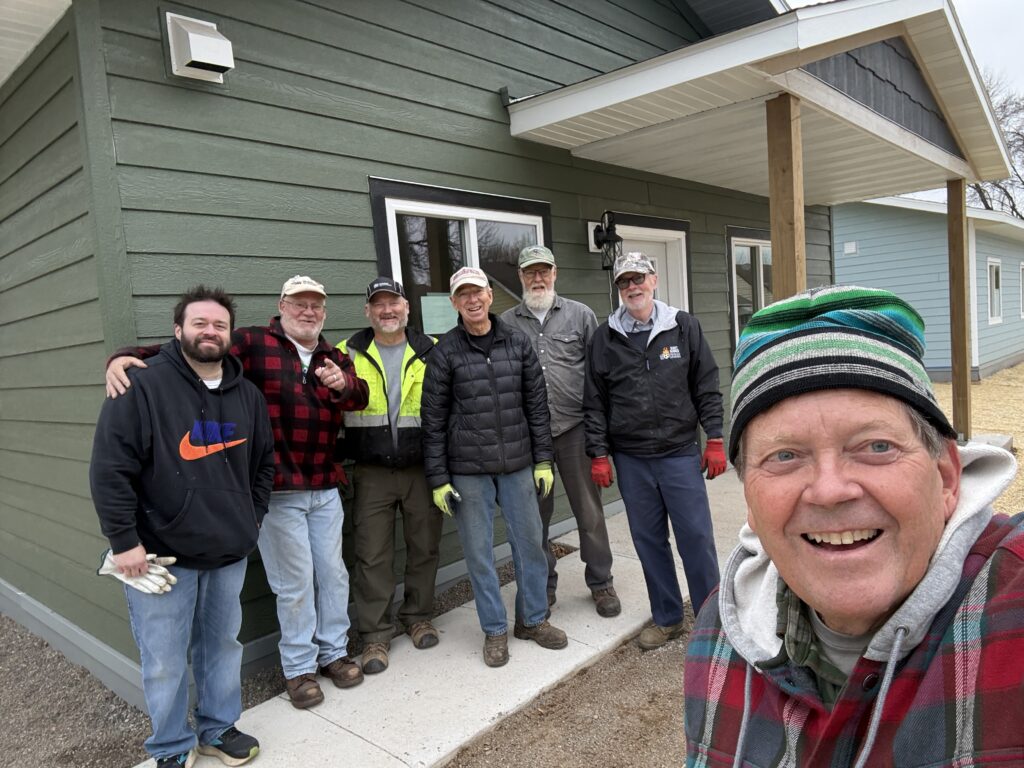
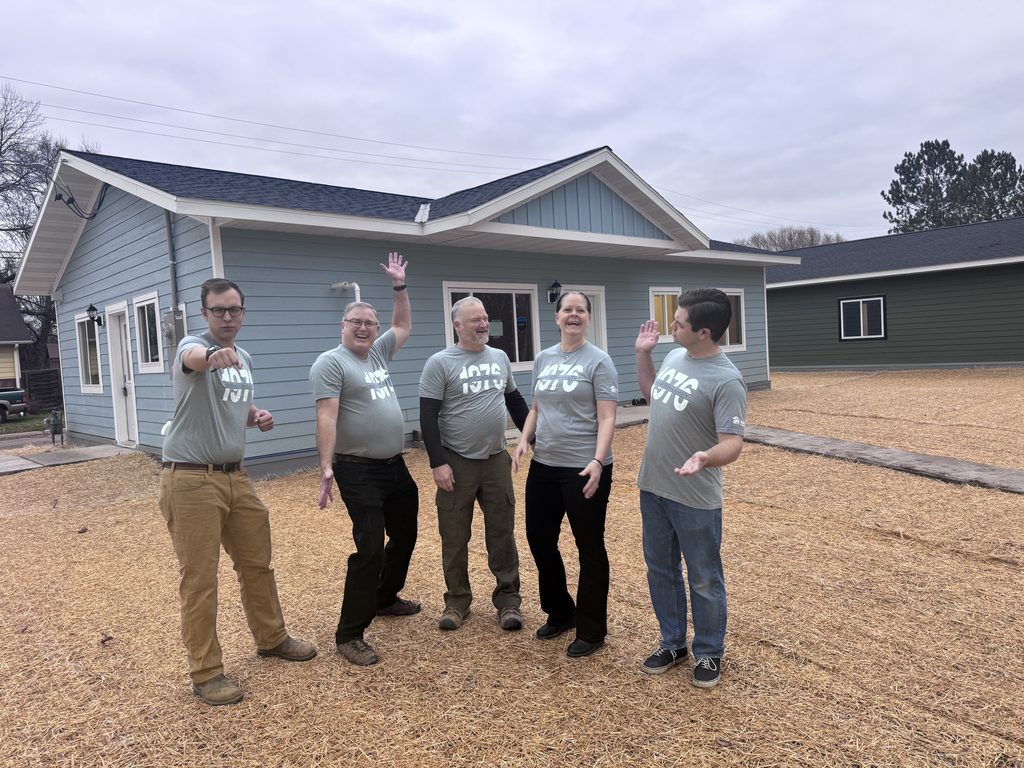
Our volunteers are hard at work finishing the first two Ridgewood homes, and the Wednesday crew knocked out the landscaping this week! We decided to take our staff Christmas card picture at the Ridgewood site. It really is beautiful!

Our contractors really stood in the gap the last five weeks. Bougalis started excavation the day after we got our permits from the City of Virginia on October 14. We broke into the street three times, once for each home to tap into the city sewer and water and bring it into each home site. The concrete in the street was also replaced.
I truly believe that God was involved in this work, as it is really unheard of to have a 47 degree day on November 19 to pour concrete and also a whole streak of warm weather before this so that we had the perfect window to get this work done.


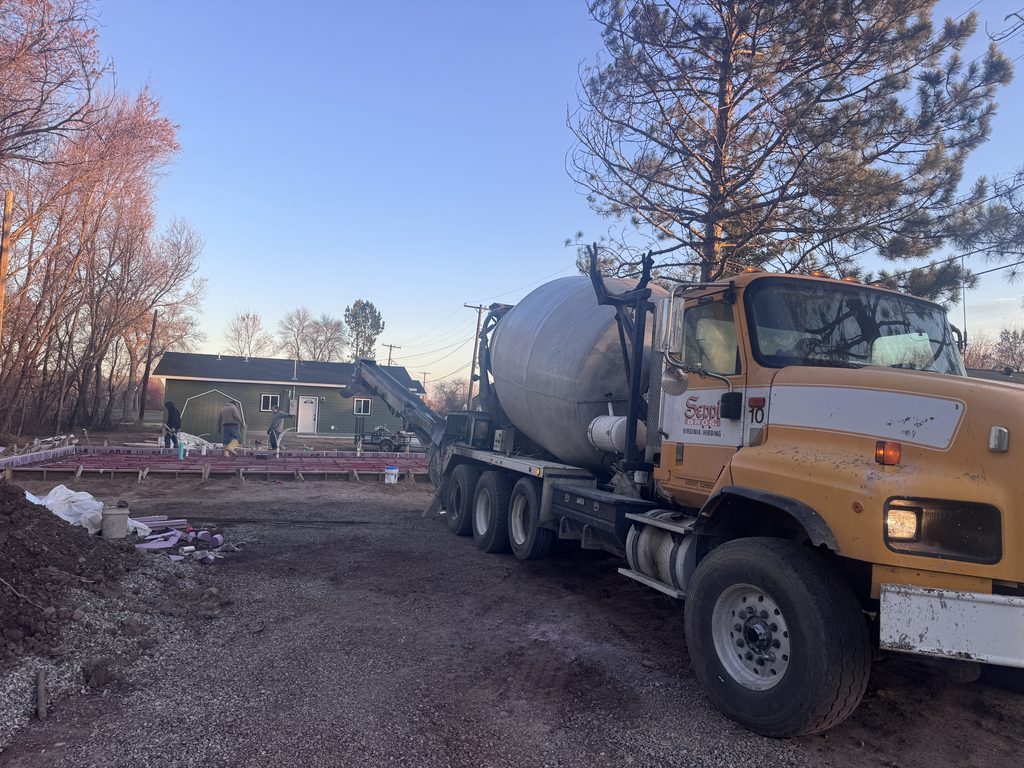
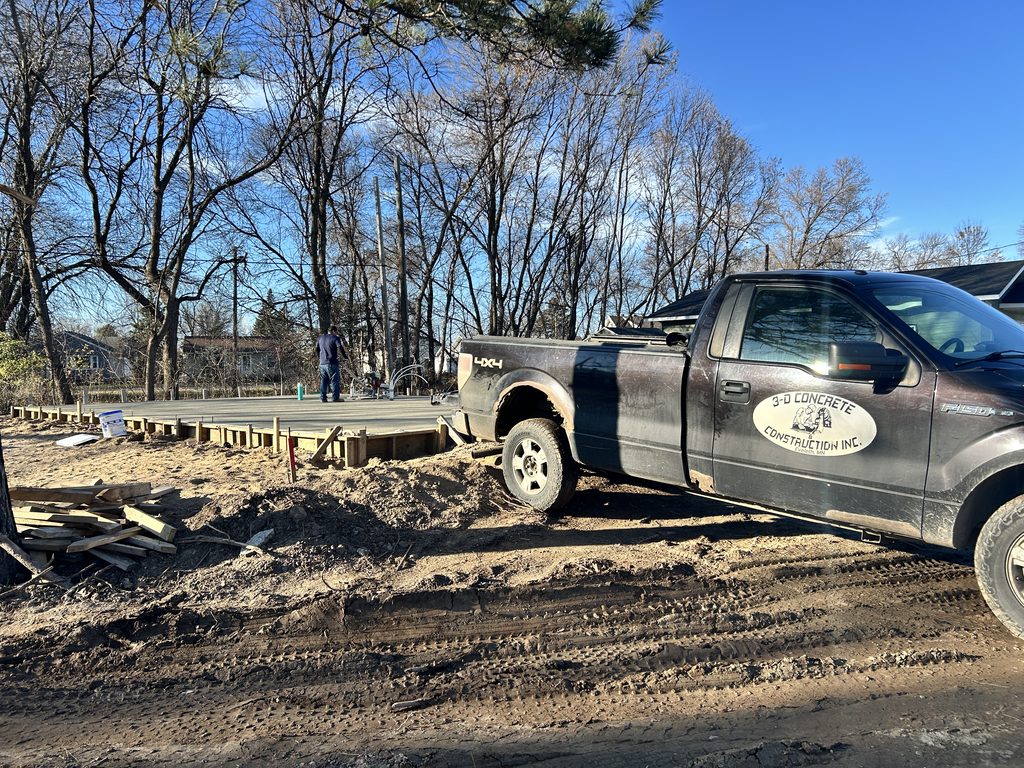
By the time they were working on foundation prep for number two, our partners at 3D Concrete were forming the first foundation and continued right behind the excavators. Our plumber, Northern Plumbing and Air, kept up with the pace and put in the underground plumbing and then the heating tubes once 3D had the foam insulation placed in each foundation. The plumber put in some time on two weekends to keep us on schedule! Seppi Concrete, during a time when EVERYONE wants concrete, provided 90 yards of concrete, nine trucks worth, to fill the foundations.

This blessing will bear fruit early this spring when we move to start framing on these homes and get a two or three month head start on the 2027 building season. That is two or three months that our partner families won’t need to endure substandard housing.

This is a good day!



Nathan Thompson
Executive Director

Read More

Building the Future with Habitat annual dinner


Habitat for Humanity is both a construction company and an ecumenical Christian housing ministry. We build homes, communities, and hope, and our 2026 annual dinner, Building the Future with Habitat, recognizes the way our program is about more than paint, plumbing, and paperwork.

Join us February 26 to celebrate the theme “The Excitement is Building!” You’ll enjoy an evening with new and familiar faces, a blueberry chutney chicken dinner, silent auction and raffle prizes, and live music by LouAnne Gilbson. The highlight of the evening will be a keynote speech by a Habitat homeowner who will share how Habitat has led to stability, civic engagement, and greater confidence.

RSVP by February 13—all guests must reserve or purchase seats in advance. Contact us at 218-749-8910 to discuss sponsorship opportunities or to donate a raffle or silent auction prize.

Read More

Education and support during the homeownership journey

From construction to closing with Habitat

Did you know that partnering with Habitat is like working with a contractor, an educator, and a lender all rolled in one? The process of building a home with Habitat takes future homeowners on a journey that begins with an empty lot and a house plan and ends with mortgage documents and most importantly, a home with a whole lot of opportunities along the way.

After an application is submitted and all the information has been verified, a home visit is scheduled, which completes the application process. If the family selection committee finds that the program criteria have been met, applicants are presented to our board of directors, without any identifying characteristics, for a final review and vote. Upon approval, applicants are called with the good news!

The next step is to schedule orientation. During orientation, we discuss Habitat’s mission, vision and history. We also visit about the construction process, expectations, policies, procedures, and how Habitat financing works. A manual is provided with all the information reviewed and serves as an information resource during the program and after closing on their Habitat home.

How do the families we partner with connect with us and with each other?
In addition to working on a building site or in our warehouse, home builders come together once per month to meet with staff as a group. We discuss upcoming sweat equity opportunities. Each adult in the household is required to complete a minimum of 200 hours and recruit a minimum of 100 hours from friends and family. We go around the room and each home builder updates the group on the status of their project, often telling us the tasks they enjoyed or something new they learned. We find these meetings to be beneficial for all! Staff members get to check in with everyone and home builders offer one another support and encouragement.

Also at these meetings, we cover educational topics. Topics include what to expect at closing, homeowner maintenance, how to be a good neighbor, and financial literacy basics. The goal is providing them with information to set them up for successful homeownership. We often invite community members in to share their expertise. For example, it is so beneficial to have a fire marshal talk about fire safety and the police chief talk about being a good neighbor and how best to stay safe at home.

One of our favorite topics to cover is “What is my Habitat story?” We ask questions to help our homebuilders tell their story. How did you come to need Habitat? How did you feel when you found out you were accepted into the program? Where are you currently living? What do you look forward to as you build and move into your home? We set the stage and interview them, giving them the practice needed to answer these type of questions whether they are on the build site, at our events, or out and about in their community. We get to know them better and are able to share their stories with our volunteers, donors, and the greater community.

We provide education and support to the home buyers as we all work together to keep their home affordable. Partnering with Habitat is unique in that we provide guidance and support throughout the building and buying process. We remain a source of information and support long after they purchase their homes.

After closing, are Habitat homeowners different than any other household?
When the house is near completion, we schedule an appraisal. It is Habitat’s policy to sell a home for the full fair market value. Around this time, we request updated income documents, run a final credit check, and order title work. When the appraisal is received and the sales price is set, we put on our lender hat and prepare for closing. Like a conventional lender, we work with a title company and prepare closing documents like a purchase agreement, loan estimate, closing disclosure, mortgage notes and the mortgage itself. Home builders bring in their required down payment and sign mortgage documents.

Then, they become new homeowners in their communities and add to the tax base by paying property taxes. They are just like every other homeowner in the community. They do not get any special tax breaks other than the homestead credit. They begin to make mortgage payments and if they are ever late, we and our loan servicer work with them to get them back on track. Like a conventional lender, we follow a process for delinquency that could result in foreclosure.

How is partnering with Habitat affordable for them? What does financing look like?
Most of our families come to us because they cannot get conventional financing. Perhaps their income is too low or their credit needs cleaning up. The first mortgage is set to an amount that results in an affordable monthly payment. Using the home buyer’s annual gross income, we set the first mortgage amount with a payment, including property taxes and hazard insurance, that is calculated at 25% of their annual income.

We expect that there will be a gap between the first mortgage amount, which is affordable for the home buyer, and the full fair market value of the home. That gap will be filled by subordinate mortgage(s) by either North St. Louis County Habitat for Humanity, Habitat for Humanity of Minnesota, or another third-party subsidy provider. This is where we are a bit different from a conventional lender. We can tap into resources to subsidize our first mortgage. Subsidy providers have their own income and credit guidelines as well as mortgage terms. We provide education and support to the home buyers as we all work together to keep their home affordable.

Partnering with Habitat is unique in that we provide guidance and support throughout the building and buying process. We remain a source of information and support long after they purchase their homes. For us, they will always be a part of our greater Habitat family. Our hope is that their communities will see and embrace them as homeowners.

To learn more about our program, call me at 218-749-8910 or email me at marnie@nslchfh.org. You can also go to the Homeownership section of our website. I look forward to hearing from you!

Marnie Maki
Family Services Manager

Read More